Bedtime Stories About the Night Sky
Simahla ukulifunda, akukho akhawunti. Ibali ngalinye elikwishelufu liyaphela.
There is a particular quality to the sky just after dark: not yet fully night, still holding the last warmth of the day's colour at the horizon, while above, the first stars are appearing so gradually that it is hard to say exactly when any one of them arrived. Bedtime stories set under this sky inhabit that in-between quality: the day is ending, something quieter is beginning, and the child is invited to lie down and look up and simply be present for the change.
Constellations offer children a beautiful double vision: they see stars, and they also see a story projected onto the stars: a bear, a hunter, a dipper, a crown. This is one of the oldest forms of storytelling humans have ever practised, and children respond to it with an immediacy that suggests it touches something ancient. A bedtime story that moves through the night sky, naming its shapes and telling the small stories behind them, gives a restless mind something vast and quiet to rest in.
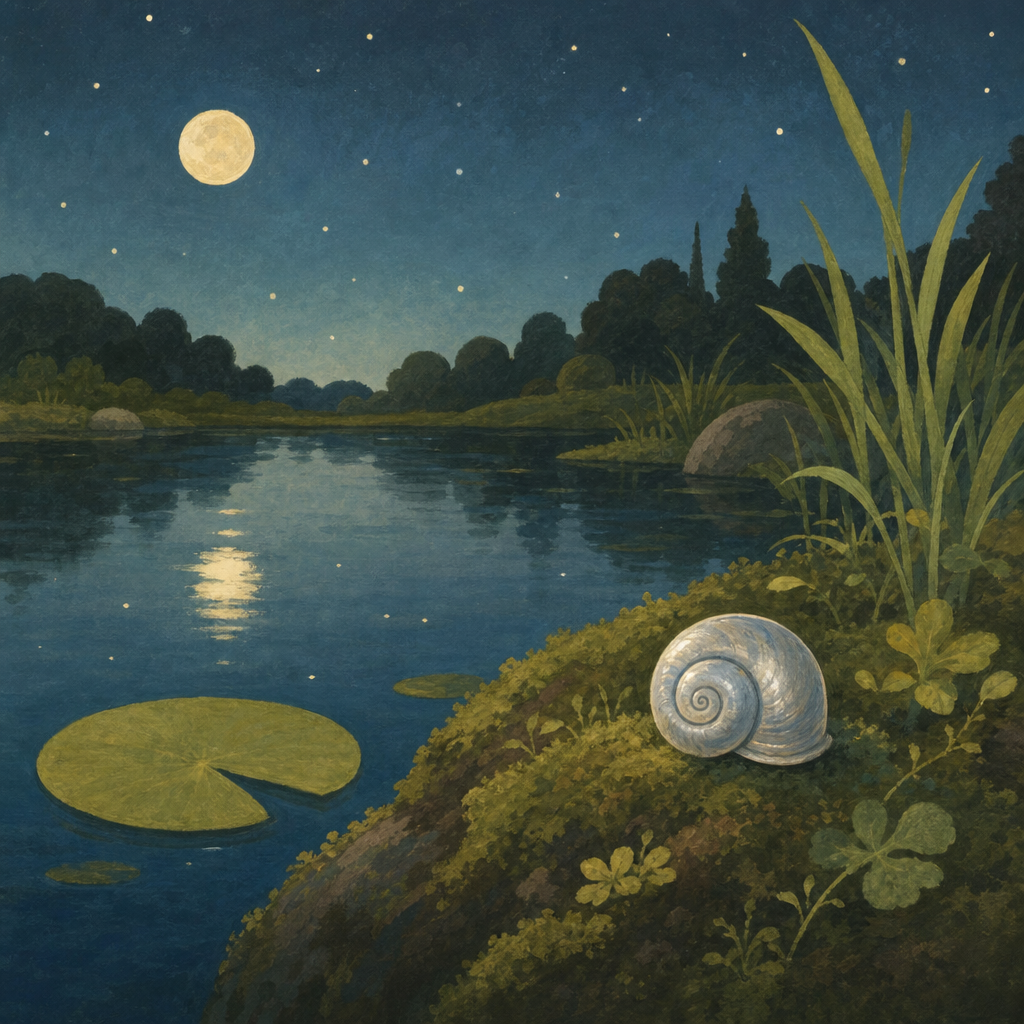
“The Snail Who Carried the Moon”
In the tall wet grass at the edge of the garden, a small snail named Pim woke up when the evening came. The day had been warm, and now the air smelled of rain that had already fallen and gone.
Pim stretched his soft grey body out of his shell, slow as honey.
The grass was cool. The sky was pink. Pim was in no hurry at all.
Funda lonke ibaliEli bali likwishelufu ukuze nabani na alifunde. Ihlabathi olenzayo libhalwa ngokweenketho zakho.
Ihlabathi, isiphelo, izahluko ezisixhenxe.
Umzali wenza ihlabathi kanye, akhethe ukuba liphela njani ngaphambi kwegama lokuqala, aze afunde ngokuvakalayo incwadi yezahluko ezisixhenxe ezidityanisiweyo, nanini na usapho lukhetha.
Khetha indawo.
Khetha indawo nabalinganiswa abambalwa, okanye wongeze abakho. Vumelanisa ubudala bokufunda nobomntwana wakho.
Khetha indlela aphela ngayo.
Wonke umntu uyabuya ekhaya, into ethile iyanikwa, okanye abalinganiswa bahlala kwihlabathi labo. Wenza isigqibo ngaphambi kokuba incwadi iqale.
Fundani kunye.
Jonga kuqala isahluko ngasinye xa unexesha. Funda ngokuvakalayo nanini na kulungele usapho lwakho, kunye neencwadi zephepha ozonwabelayo.
Incwadi yokuqala ifumaneka simahla. Yonke incwadi emva kwayo iqala ngesahluko sasimahla, kwaye intsalela yencwadi ibiza $14, kube kanye kuphela. Funda nanini na xa uthanda. Akukho bhaliso. Ixabiso lokwazisa.
Yenza ihlabathiImibuzo eqhelekileyo
How do night sky stories help children fall asleep?
Stories set under the night sky naturally encourage the same physical orientation as sleep: lying down, looking up or closing eyes, breathing slowly. The pace of the night sky (stars appearing gradually, the moon rising, the slow turning of constellations) is one of the most settling rhythms available to the imagination. Children who look up at a real or imagined sky tend to stop moving, and stopping moving is the first step toward sleep.
Can I use a night sky story even if we live in a city with light pollution?
Yes. Night sky stories often begin from a place outside the city, a hillside, a garden, a meadow, or simply describe the stars as they would appear in a darker sky, which children's imaginations readily supply. A story can also acknowledge the city sky and find beauty in it: the glow on the clouds, the few bright stars that make it through, the particular amber of urban night.
What constellation stories are most calming for children?
Bear-based constellations (Ursa Major and Minor) and simple geometric patterns like the Plough work well for young children. Orion's Belt is a reliable starting point for school-age children. The most settling approach is not to teach astronomy but to find shapes together and make small quiet stories about them: the bear who came to the sky to sleep, the three sisters who walk slowly across the night.
Are night sky stories suitable for very young children (under 4)?
Yes, with a simpler register. For very young children, the night sky story can be as simple as counting stars as they appear, or following the moon as it climbs above the rooftops. The key detail (that the sky is big and quiet and the child is small and warm) is accessible to children of almost any age.
Ndingalenza ihlabathi elijikeleze lo mxholo?
Ewe. Kwindawo yokusebenzela ukhetha indawo nabo bahlala kuyo, okanye uchaze eyakho, uze wongeze nantoni na engafanele yenzeke. Unokukhankanya igama lomntwana wakho ukuba uyathanda. Emva koko ukhetha ukuba incwadi iphela njani, ngaphambi kwegama lokuqala, uze ufunde izahluko zayo ezisixhenxe ngokuvakalayo nanini na kulungele usapho lwakho.