Bedtime Stories About Forest Animals
Zifundwa mahhala, akudingeki i-akhawunti. Yonke indaba esesihlalweni iyaphela.
The forest at night is one of the most complete worlds available to the bedtime imagination: layered, alive, full of creatures who are only visible if you are very still and very quiet. A bedtime story set in the forest invites children into exactly that stillness. You have to slow down to see a hedgehog settling under a log. You have to be very quiet to hear an owl land in a fir tree. Forest stories teach the body to do what the mind is being asked to do: be still, be quiet, wait.
Forest animals carry the additional gift of being real: these are not invented creatures, but actual animals that a child knows exist, going about their actual lives in actual darkness right now, as the story is being told. The owl is real. The badger is real. The deer stepping carefully through the bracken is real. This combination of imagination and reality gives forest stories a particular grounding quality that purely fantastical stories sometimes lack.
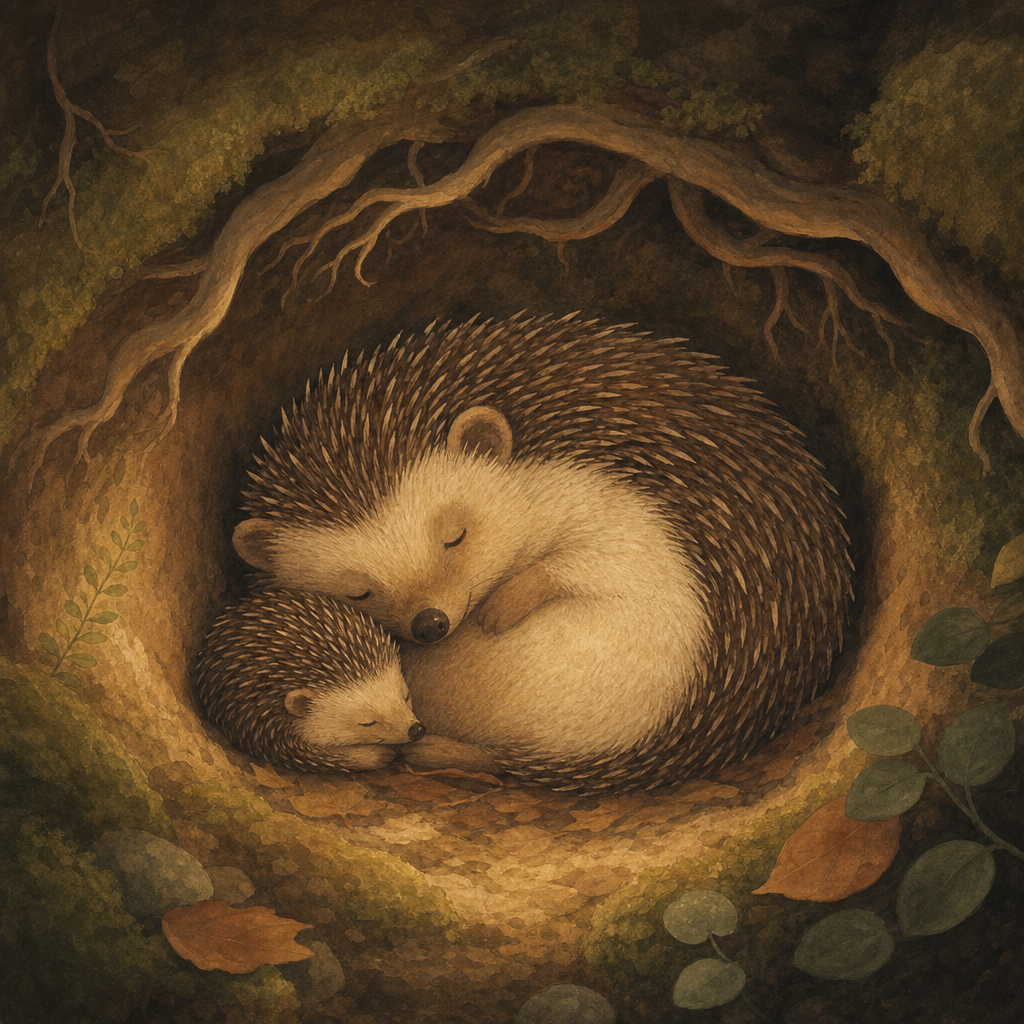
“Slow Paw, Soft Paw”
The rain is done. The grass is wet. The sky goes soft and gray. Bo the hedgehog stops and blinks where the burrow bends away.
Down in the burrow it is dark. Bo stands. Bo does not go. His prickles lift. His small nose twitches. "Dark," says Bo, soft and low.
Funda indaba yonkeLe ndaba isesihlalweni ukuze noma ubani ayifunde. Umhlaba owenzayo ubhalwa ngokuya ngezinqumo zakho.
Umhlaba, isiphetho, izahluko eziyisikhombisa.
Umzali wakha umhlaba kanye, akhethe ukuthi uphela kanjani ngaphambi kwegama lokuqala, bese efunda ngokuzwakalayo incwadi yezahluko eziyisikhombisa eziboshelene, noma nini umndeni uthanda.
Khetha indawo.
Khetha indawo nabalingiswa abambalwa, noma ungeze abakho. Fanisa iminyaka yokufunda nengane yakho.
Khetha ukuthi iphela kanjani.
Wonke umuntu uyabuya ekhaya, into ethile iyanikelwa, noma abalingiswa bahlala emhlabeni wabo. Unquma ngaphambi kokuba incwadi iqale.
Fundani ndawonye.
Buka kuqala isahluko ngasinye uma unesikhathi. Funda ngokuvakalayo noma nini lapho kulungele umndeni wakho, kanye nezincwadi zephepha ozithandayo.
Incwadi yokuqala mahhala. Yonke incwadi elandelayo iqala ngesahluko samahhala, bese incwadi esele ibiza $14, kanye kuphela. Funda noma nini ofuna ngalo. Alukho ukubhalisela. Intengo yokwethula.
Yenza umhlabaImibuzo evame ukubuzwa
Which forest animals make the best bedtime story characters?
Animals with natural nighttime settling behaviour are ideal: badgers (returning to their sett), hedgehogs (curling up), deer (lying down in meadow edges), owls (settling on their perch), dormice (their hibernation is one of the most extreme examples of restful sleep in nature). Foxes, rabbits, and woodland mice also work beautifully. The key is choosing an animal whose natural behaviour involves finding somewhere safe and still.
Are forest stories appropriate for children who are afraid of the dark?
Forest stories for bedtime should always treat the dark as comfortable and safe for the animals in them, not mysterious or frightening. The darkness of a sett or a hollow tree is a home; the darkness of the forest is where familiar creatures move without hesitation. Children who are anxious about the dark sometimes find it helpful to hear the dark treated as a place where very ordinary, very peaceful things are happening.
Can a forest story be set in a specific season?
Yes. Autumn and winter forest stories often feel particularly settling: the forest is quieter, the animals are preparing for rest, and the quality of light and air changes in ways that match the mood of bedtime. Spring and summer stories have a different quality, more alive and more full of sound, but can be equally beautiful when focused on the creatures that settle at night even in warm weather.
What age range enjoys forest animal stories most?
Forest stories tend to work well from age 3 through about 10. Younger children love the characters and the safety of creatures in their homes. Older children in this range often appreciate the naturalist detail: the accuracy of animal behaviour, the specific plants and features of a woodland, the sense of a complete and self-sufficient world going about its quiet business.
Ngingawenza yini umhlaba ozungeze lesi sihloko?
Yebo. Endlini yokusebenzela ukhetha indawo nalabo abahlala kuyo, noma uchaze eyakho, bese wengeza noma yini okungafanele yenzeke nanini. Ungaphinda umqambe igama lengane yakho uma uthanda. Bese ukhetha ukuthi incwadi iphela kanjani, ngaphambi kwegama lokuqala, bese ufunda izahluko zayo eziyisikhombisa ngokuzwakalayo noma nini okulungele umndeni wakho.