Bedtime Stories About the Seaside
Za darmo, bez konta. Każda bajka na półce się kończy.
There may be no sound more naturally settling than waves arriving and withdrawing, arriving and withdrawing: a rhythm so close to slow breathing that the body tends to follow it without being asked. A seaside bedtime story borrows that rhythm. Set in the quiet of late afternoon turning to evening, when the crowds have gone and the light goes gold and then soft grey, the beach becomes one of the most peaceful places a child's imagination can spend the last few minutes before sleep.
The power of these stories is almost entirely sensory. The particular warmth the sand keeps after the sun has dipped. The cool ribbon of water that runs over bare feet and then pulls gently back, drawing a little sand from under the heels. The smell of salt, the cry of a single gull going home, the way a smooth stone or a curl of shell sits in a small palm. None of this asks anything of a tired mind: it simply gives it warm, slow things to rest against.
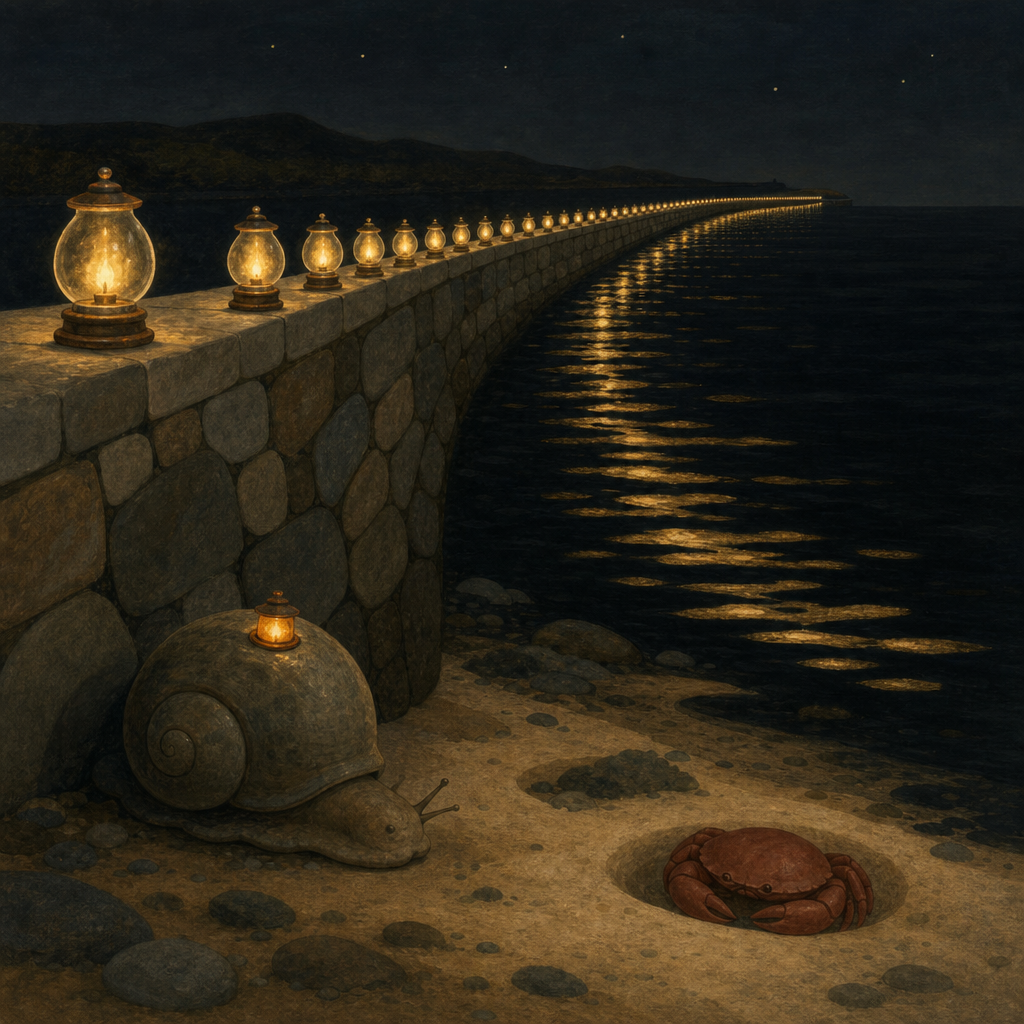
“The Lamplighter Snail”
In the hour when the harbor town went blue with evening, a snail named Perl left her shell of polished stone and set out along the sea wall. She carried a tiny lantern on her back, no bigger than a thimble, and inside it a single warm spark.
The wall was long. The wall was cool. The wall was hers to keep.
Przeczytaj całą bajkęTa bajka stoi na półce dla każdego. Świat, który stworzysz, powstaje wokół twoich własnych wyborów.
Świat, zakończenie, siedem rozdziałów.
Rodzic tworzy świat raz, wybiera zakończenie, zanim padnie pierwsze słowo, i czyta na głos książkę z siedmiu powiązanych rozdziałów, kiedy tylko rodzina ma ochotę.
Wybierz miejsce.
Wybierz miejsce akcji i kilku bohaterów albo dodaj własnych. Dopasuj wiek czytelnika do swojego dziecka.
Wybierz zakończenie.
Wszyscy wracają do domu, ktoś coś oddaje albo bohaterowie zostają w swoim świecie. Decydujesz o tym, zanim książka się zacznie.
Czytajcie razem.
Obejrzyj każdy rozdział, kiedy masz chwilę. Czytaj na głos, kiedy pasuje Twojej rodzinie, obok papierowych książek, które lubicie.
Pierwsza książka jest bezpłatna. Każda kolejna zaczyna się od darmowego rozdziału, a reszta książki kosztuje $14, jednorazowo. Czytaj, kiedy chcesz. Bez subskrypcji. Cena wprowadzająca.
Stwórz światCzęste pytania
Why are seaside stories so calming at bedtime?
The rhythm of waves closely mirrors slow, restful breathing, and the mind tends to fall into step with it. A seaside story set in the quiet of evening pairs that rhythm with warm, gentle sensory detail (sand, salt air, soft light), giving a busy mind soothing things to rest against rather than anything to follow or solve.
Are beach bedtime stories suitable for very young children?
Yes, they're among the most accessible, because they ask nothing of a child but to notice nice things. From around age 3, children settle easily into the warmth of sand and the hush of waves. The lack of plot is a feature: there's no excitement to ride out before sleep can come.
My child has never been to the sea. Will the story still work?
Beautifully. A child doesn't need to have visited the beach for the sensory images (warmth, soft water, a smooth stone in the hand) to feel calming and real. For many children, an imagined seaside becomes a favourite place to return to at bedtime precisely because it lives only in the gentlest part of their mind.
Czy mogę stworzyć świat wokół tego tematu?
Tak. W pracowni wybierasz miejsce i tych, którzy w nim mieszkają, albo opisujesz własnych, i dodajesz wszystko, co nigdy nie może się wydarzyć. Jeśli chcesz, możesz użyć imienia swojego dziecka. Potem wybierasz, jak książka się zakończy, zanim padnie pierwsze słowo, i czytasz jej siedem rozdziałów na głos, kiedy tylko pasuje to Twojej rodzinie.
Ile to kosztuje?
Pierwsza książka jest bezpłatna. Każda kolejna zaczyna się od darmowego rozdziału, a reszta książki kosztuje $14, jednorazowo. Czytaj, kiedy chcesz. Bez subskrypcji. Cena wprowadzająca.
Czy potrzebuję konta, żeby przeczytać opowieść?
Nie. Opowieści z darmowej biblioteki otwierają się bez konta. Konto przydaje się, żeby zachować własny świat.