Bedtime Stories About Outer Space and the Moon
Gratis para leer, sin cuenta. Todos los cuentos de la estantería terminan.
The night sky has been a sleeping companion for children since long before electric lights dimmed our view of it. There is something profoundly settling about looking up (or imagining looking up) at stars that are impossibly far away, burning steadily through all of time. A bedtime story set in outer space, when it is told with wonder rather than urgency, invites a child's mind to expand outward and then grow very still, the way the universe itself is mostly stillness interrupted by occasional light.
The moon, in particular, holds a special place in the ritual of going to sleep. Cultures across the world have told children that the moon is watching over them, that it rises as they settle, that it has a journey of its own across the dark. These stories are not just comforting myths: they give children a sense of belonging to something larger and quieter than the busy day that is ending.
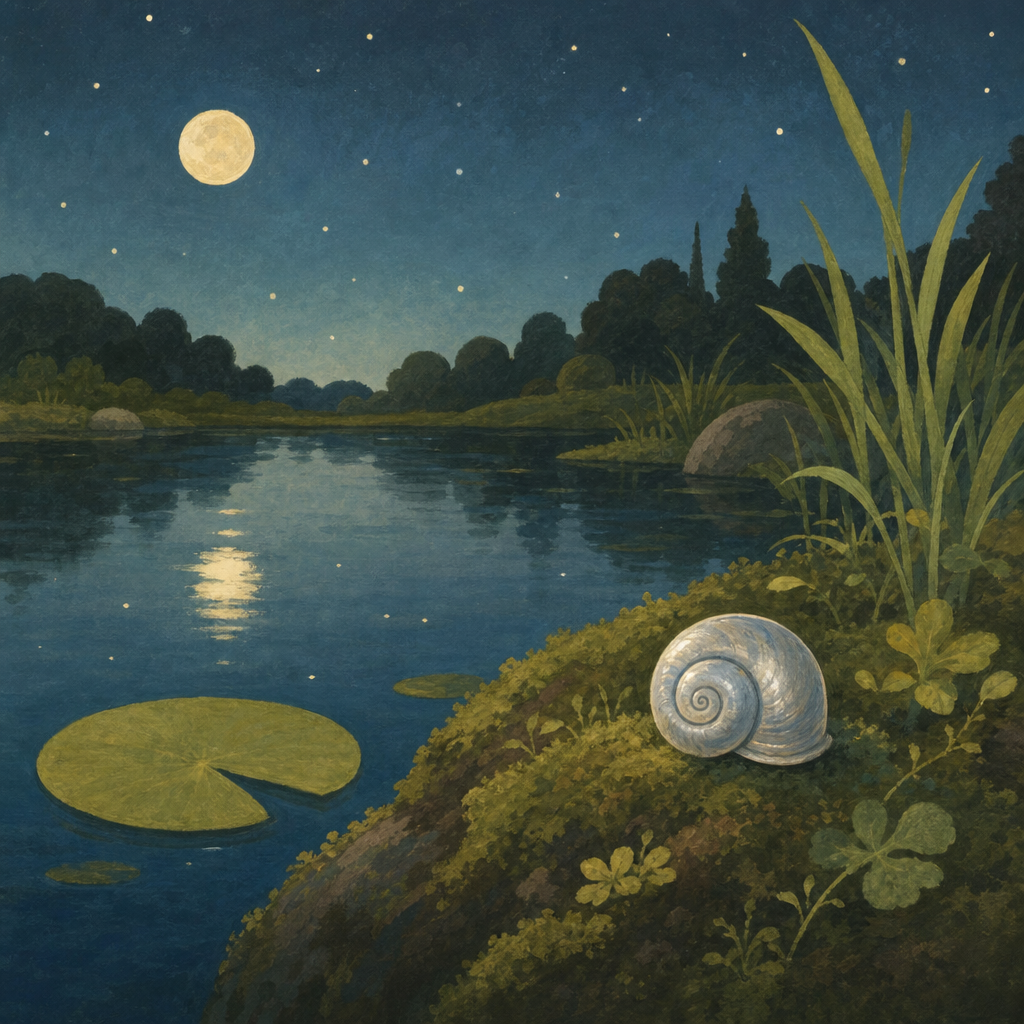
“The Snail Who Carried the Moon”
In the tall wet grass at the edge of the garden, a small snail named Pim woke up when the evening came. The day had been warm, and now the air smelled of rain that had already fallen and gone.
Pim stretched his soft grey body out of his shell, slow as honey.
The grass was cool. The sky was pink. Pim was in no hurry at all.
Leer el cuento completoEste cuento está en la estantería para que cualquiera lo lea. Un mundo que tú creas se escribe en torno a tus propias decisiones.
Un mundo, un final, siete capítulos.
Una madre o un padre crea un mundo una sola vez, elige cómo termina antes de la primera palabra y lee en voz alta un libro de siete capítulos conectados, cuando mejor le venga a la familia.
Elige un lugar.
Elige un escenario y algunos personajes, o añade los tuyos. Ajusta la edad de lectura a la de tu peque.
Elige cómo termina.
Todos vuelven a casa, se regala algo o los personajes se quedan en su mundo. Lo decides antes de que empiece el libro.
Leed juntos.
Echa un vistazo a cada capítulo cuando tengas tiempo. Léelo en voz alta cuando mejor le venga a tu familia, junto a los libros de papel que os gustan.
El primer libro es gratis. Todos los siguientes empiezan con un capítulo gratis, y el resto del libro cuesta $14, una sola vez. Lee cuando quieras. Sin suscripción. Precio de lanzamiento.
Crea un mundoPreguntas frecuentes
Why do children find outer space calming at bedtime?
The silence and scale of space can have a paradoxically settling effect on busy young minds. Stories set in space naturally slow the pace: there's no traffic, no noise, no rushing, just the slow arc of a spacecraft and the steady light of distant stars. Children who struggle to quiet their thoughts sometimes find that imagining the enormous, patient stillness of space gives their minds somewhere peaceful to rest.
Are space bedtime stories suitable for young children (under 5)?
Yes, especially when focused on the moon and stars rather than technical space travel. Young children respond beautifully to the moon as a companion: it rises when they sleep, it watches over the neighbourhood, it has a gentle, reliable presence. Stories that treat the moon as a warm, familiar character rather than a scientific object work wonderfully from around age 2 and up.
How does a bedtime space story handle the vastness of space without overwhelming children?
By zooming in. Rather than trying to encompass the entire universe, a good bedtime space story focuses on one small window, one particular star, one quiet moment aboard a spacecraft. The enormity is present as a felt sense, a backdrop, but the child's experience is intimate and specific. It's the difference between describing the ocean and describing the feeling of one wave washing over your feet.
¿Puedo crear un mundo sobre esta temática?
Sí. En el taller eliges un lugar y quién vive en él, o describes el tuyo propio, y añades todo lo que nunca debe pasar. Si quieres, puedes poner el nombre de tu hijo o hija. Después eliges cómo termina el libro, antes de la primera palabra, y lees sus siete capítulos en voz alta cuando mejor le venga a tu familia.
¿Cuánto cuesta?
El primer libro es gratis. Todos los siguientes empiezan con un capítulo gratis, y el resto del libro cuesta $14, una sola vez. Lee cuando quieras. Sin suscripción. Precio de lanzamiento.
¿Necesito una cuenta para leer un cuento?
No. Los cuentos de la biblioteca gratuita se abren sin cuenta. La cuenta sirve para guardar un mundo propio.