Bedtime Stories About the Night Sky
القراءة مجانية، بلا حساب. وكل قصة على الرف لها نهاية.
There is a particular quality to the sky just after dark: not yet fully night, still holding the last warmth of the day's colour at the horizon, while above, the first stars are appearing so gradually that it is hard to say exactly when any one of them arrived. Bedtime stories set under this sky inhabit that in-between quality: the day is ending, something quieter is beginning, and the child is invited to lie down and look up and simply be present for the change.
Constellations offer children a beautiful double vision: they see stars, and they also see a story projected onto the stars: a bear, a hunter, a dipper, a crown. This is one of the oldest forms of storytelling humans have ever practised, and children respond to it with an immediacy that suggests it touches something ancient. A bedtime story that moves through the night sky, naming its shapes and telling the small stories behind them, gives a restless mind something vast and quiet to rest in.
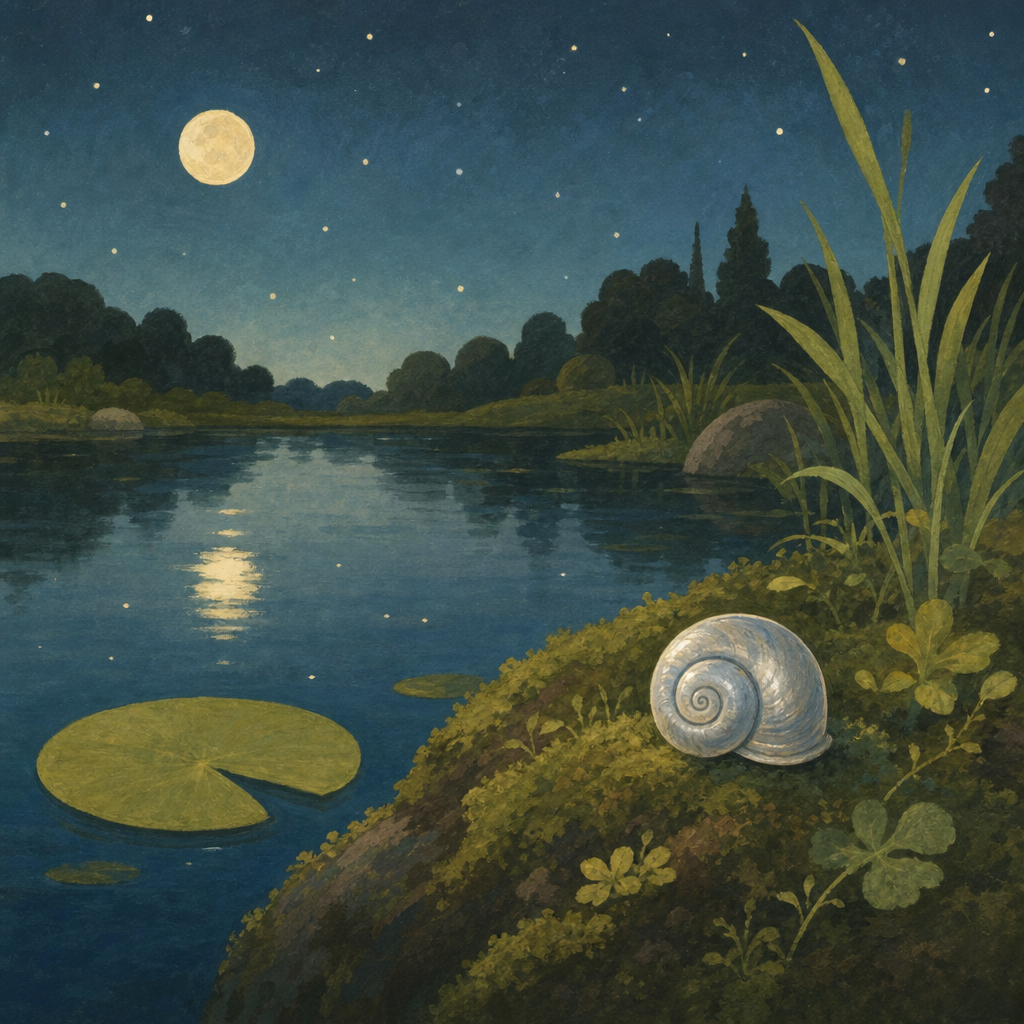
“The Snail Who Carried the Moon”
In the tall wet grass at the edge of the garden, a small snail named Pim woke up when the evening came. The day had been warm, and now the air smelled of rain that had already fallen and gone.
Pim stretched his soft grey body out of his shell, slow as honey.
The grass was cool. The sky was pink. Pim was in no hurry at all.
اقرأ القصة كاملةهذه القصة على الرف لكل من يرغب في قراءتها. أما العالم الذي تبنيه أنت فيُكتب وفق اختياراتك.
عالم، ونهاية، وسبعة فصول.
يبني أحد الوالدين عالمًا مرة واحدة، ويختار نهايته قبل الكلمة الأولى، ثم يقرأ بصوت عالٍ كتابًا من سبعة فصول مترابطة، في أي وقت تحبه العائلة.
اختر مكانًا.
اختر مكانًا وبعض الشخصيات، أو أضف شخصياتك الخاصة. واضبط عمر القراءة ليناسب طفلك.
اختر النهاية.
يعود الجميع إلى البيت، أو يُهدى شيء ما، أو تبقى الشخصيات في عالمها. أنت تقرر ذلك قبل أن يبدأ الكتاب.
اقرؤوا معًا.
اطّلع على كل فصل مسبقًا حين يتسع وقتك. واقرأ بصوت عالٍ متى ناسب عائلتك، إلى جانب الكتب الورقية التي تحبونها.
الكتاب الأول مجاني. وكل كتاب بعده يبدأ بفصل مجاني، وبقية الكتاب بسعر $14، مرة واحدة. اقرأ متى شئت. بلا اشتراك. سعر تعريفي.
ابنِ عالمًاأسئلة شائعة
How do night sky stories help children fall asleep?
Stories set under the night sky naturally encourage the same physical orientation as sleep: lying down, looking up or closing eyes, breathing slowly. The pace of the night sky (stars appearing gradually, the moon rising, the slow turning of constellations) is one of the most settling rhythms available to the imagination. Children who look up at a real or imagined sky tend to stop moving, and stopping moving is the first step toward sleep.
Can I use a night sky story even if we live in a city with light pollution?
Yes. Night sky stories often begin from a place outside the city, a hillside, a garden, a meadow, or simply describe the stars as they would appear in a darker sky, which children's imaginations readily supply. A story can also acknowledge the city sky and find beauty in it: the glow on the clouds, the few bright stars that make it through, the particular amber of urban night.
What constellation stories are most calming for children?
Bear-based constellations (Ursa Major and Minor) and simple geometric patterns like the Plough work well for young children. Orion's Belt is a reliable starting point for school-age children. The most settling approach is not to teach astronomy but to find shapes together and make small quiet stories about them: the bear who came to the sky to sleep, the three sisters who walk slowly across the night.
Are night sky stories suitable for very young children (under 4)?
Yes, with a simpler register. For very young children, the night sky story can be as simple as counting stars as they appear, or following the moon as it climbs above the rooftops. The key detail (that the sky is big and quiet and the child is small and warm) is accessible to children of almost any age.
هل يمكنني بناء عالم حول هذا الموضوع؟
نعم. في الورشة تختار مكانًا ومن يعيش فيه، أو تصف عالمك بنفسك، وتضيف أي شيء يجب ألا يحدث أبدًا. يمكنك أن تذكر اسم طفلك إن أحببت. ثم تختار نهاية الكتاب قبل الكلمة الأولى، وتقرأ فصوله السبعة بصوت عالٍ في الوقت الذي يناسب عائلتك.